Saturday, February 23, 2019

Deadwood Episode Guide: The Trial of Jack McCall


5. The Trial of Jack ,McCall
Written by John Belluso
Directed by Ed Bianchi
(Note: From this point on, the ‘Written by’ credit is something of a misnomer, as every script from this point will have written in the style described earlier.)

God, the law, and one’s health. All three ideas are at the center of what we call civilization. All three are noticeably absent from Deadwood In this episode, we get bits and pieces of all three converging around the death of Wild Bill Hickok.
The idea of God in a place like the camp seems very remote. And yet there has been a presence of sort ever since we arrived in Reverend Smith. I have not delved into his character the same way I have dealt with many of the other leads, but now is as good a time as any. Reverend Smith is the figure of God, or at least whatever counts for his representative on Earth. We have seen him presiding over the funerals of the men Hickok shot in the second and third episodes of the show, and now we find him standing over Wild Bill himself.  Reverend Smith is an aberration in Deadwood, a good man trying to do the right thing. The fact that men like Swearengen and his like have ignored him until now is hardly surprising. Most of his encounters have been through Sol and Bullock, and with each succeeding death Bullock has become more irritated. Now, understandably infuriated at the sudden loss of his friend, Bullock has barely any patience to deal with Smith’s understandable desire to lay Wild Bill to rest. And when Smith starts preaching from St. Paul about the purpose of the body, and not knowing God’s plan, it also Bullock can do to refrain from snapping his head off:

“The man is a lunatic. High water he never made much sense, but now he just utters pure gibberish…What part of my part is your part? Is my foot your knee? What about your ear? What the fuck is that?”

There is a certain amount of logic is Bullock’s rant to Sol – Smith is becoming less and less coherent, for reasons that will soon become unavoidably clear. And it’s also true that Bullock is less interesting in hearing the word of God then acting on vengeance – prior to the funeral, he rushes into the freezer they’re keeping McCall, and barely is stopped from choking him to death. But there is a more pertinent reason to Smith’s sermon and Bullock’s reaction to it. Smith is trying, however distorted the message, to conceive of the idea that we must all come together for a common good. Bullock knows in his gut that he has a part to play in that, and is resisting it firmly, because it’s everything he came to Deadwood to get away from.
Of course, he has more reason to be furious at what is going. As the episode begins, people are standing behind to see the decaying form of Hickok, and also to participate in his trial. Swearengen and Tolliver observe this from the balcony with what appears to be disinterest. But Swearengen seems to see a larger problem with this that has seemingly escaped everybody.  He knows that a trial of Hickok’s murderer will bring notoriety to the camp from the U.S. government, which is considering the annexation of South Dakota. If they starting holding trials and enacting their own laws outside of the United States, there’s a far large that every the camp stands for will be buried. This kind of foresight isn’t the kind of thing you’d expect from the murderous man we’ve seen so far, though my guess is, he’d probably say he was protecting his wallet.
After allowing the trial to place in The Gem, he observes it with dispassion, and then calls to speak with the judge, and puts things in very blunt terms. Being Swearengen, he starts out with a bloodthirsty proposition, offering to have three men go into McCall’s cell, and slit his throat. End of problem.  Then, however, he basically puts in a very succinct terms what he has already told Tolliver, basically trying to instruct the judge that it is in the camps interest for McCall to be found not guilty. The judge then offers very pointed instructions to the jury, and within an hour McCall is found innocent.
McCall himself seems even more disconnected than he was when Hickok was alive. He may be either fighting off a hangover, or simply too ignorant to realize the consequence, but throughout the episode, he barely seems aware of what is going on around him. When Bullock bursts into his cell, apparently still full of the bravado from shooting Hickok, he openly taunts him: “You think they know who I am in New York City now?” Then, when the man appointed to defend him comes in, and tries to put together a defense that will barely hold water, he doesn’t seem to understand it at first, and when he’s cross-examined, he barely seems able to keep his story straight. If the fix wasn’t in, there would’ve been no way, he would’ve hung right there.
And even after all this, he still doesn’t seem to get the danger he’s in. Once again, it takes Swearengen (in the only direct exchange they will ever have) to tell him in basic terms that there is a horse outside, and he’d better get the hell out of time before somebody who cares – or him – will put an end to him. He finally gets it, and manages to ride out of town, moments after Bullock and Sol return from Hickok’s funeral.
This brings us to the third major storyline underlying this episode – health. Andy Cramed is still sickening and getting worse and Tolliver’s reaction is basically “out of sight, out of mind.” He gets one of his lackeys to dump Cramed in the woods. Joanie takes this very badly, and in her first burgeoning sign of independence, she leaves the Bella Union to go to Hickok’s funeral. Cy permits this, perhaps realizing that this out of some degree of guilt of his own. However, Doc resurfaces to check on his patient, and he doesn’t take it nearly as well, spitting as Tolliver that if there are more sick people coming, the closest source of vaccine is in Nebraska. Cy reacts to this by asking one of his aides to go and taste ‘Nebraska pussy”, and not tell anyone else why he sent him.
At this juncture, it’s easy enough to assume that Cramed is a doomed man. But after being left in the woods, he is met by a very drunk but still capable Jane, who despite getting frustrated that all the delirious Cramed seems able to say is “I apologize”, never the less goes about the business of treating him. She is sidelined when she witnesses Wild Bill’s funeral from a distance (a symbol that she will never again quite be a part of the camp), but once again, we get a clear demonstration of Jane’s compassion even under the most grievous of circumstances.
A less extreme case of disability is going on back at camp. Alma is going through a case of withdrawal from her laudanum addiction, and she knows that it’s going to make her life hell, which is now doubly difficult since she is caring for Sofia, now that Jane has abandoned her. Farnum can clearly sense her difficulties, and order to try and more easily ply her, goes to Al and very lucidly lays out his plan: considering the widow is coming up a dope addiction, Al will provide a whore, who will bring her opium to keep her high. Even Swearengen admits this is well thought out. Farnum is clearly far more clever than he looks, and in a marvelous monologue, elucidates that he knows exactly why Al wants him to buy back the claim, why he thinks he entitled to a piece, and just how badly used he feels by Swearengen in general. Sanderson gives a delivery so marvelous, you’d have a hard time believing how terrified was about giving exactly these kinds of speeches.
Indicating the level of trust he has in her, Al sends Trixie to run this particular errand.  This is the first formal meeting between the two, and it’s rather remarkable how well it plays out. Understandably, there’s some awkwardness in the beginning, but some of the buried compassion that we saw in the last episode is clearly there. Rather then follow her pimp’s orders, Trixie goes to Doc, and tries to get her an herbal remedy that will help Alma’s withdrawal a bit easier. The fact that both Doc and Trixie are trying to help Alma stay in camp seems to come as a surprise even to them, considering both think it would be better for her to leave. Perhaps the common link is Sofia who, though she will never real be developed as a character will represent a symbol of a force of good, perhaps as potential for the future.
But not all omens are good ones. Near the end of the episode, just prior to Seth riding out of camp, Reverend Smith returns to his tent. The second he gets inside, he starts to shake in what appears to be some form of seizure. He clutches his bible as if for salvation, and then collapses half in, half out. In the hustle and bustle of the muddy street, no one takes notice. Justice has not prevailed, and God seems notably absent.

Friday, February 22, 2019

Why The Oscars are Broken... And How To Fix Them


By all standards by which we measure success, this year’s Academy Awards should be the most anticipated in over a decade. Black Panther, one of the highest grossing movies in history is up for Best Picture, as are Bohemian Rhapsody and A Star is Born, two of the biggest box office hits of the year. What is more, unlike so many years in the past, the Best Picture race is wide open. Roma, the critical darling that has won the lion’s share of the Best Director prizes, should have the edge, but it’s a foreign language movie, and that’s a type of film that has a hard enough time getting Best Picture nominations in the first place. Bohemian Rhapsody won the Best Drama prize from the Golden Globes, but its been a very critically divisive film. Green Book won Best Comedy and triumphed at the Producer Guild. In a huge upset, Black Panther won the Best Ensemble from the SAG awards. The Favorite was the big winner at BAFTA, and A Star is Born is one of the movies that the Oscars love honoring.
So, there’s a very good chance that this Sunday’s Oscars could be the most watched in a decade. But there’s also a very good chance that the ceremony could be a complete disaster.  For the first time in thirty years, the Oscars does not have a host. This is a self-inflicted wound by the Academy for not having a ready replacement when scandal rocked Kevin Hart.
In all candor, though, the Academy has been self-inflicting a lot of wounds right from the start. There was the uproar when they announced in July that they were planning to give an award for Most Popular Film.  When so many people got pissed – mainly because the Academy never defined what ‘popular meant’ and the idea of having to admit that the Oscars didn’t recognize the most popular films – they shelved it less than a week late. Then, just a week ago, they announced that several of their minor awards, including Best Cinematography and Editing, would be given off screen. The technical guilds threw a fit, and the Academy reversed itself again two days later.
All of these problems have come at a time when more and more people are wondering if the Academy Awards is relevant at all. This is nothing new; people have been making arguments about for decades. But at a time when Oscar ratings have been dropping steadily for years, reviews of the telecast have been increasingly hostile, and so much of Hollywood is under fire for charges of sexism within the industry, there are increasing worries within the Academy that the Awards may be becoming a weight around the industry rather than the crown jewel its supposed to be.
I would like to propose a counter-argument. Most of the problems the Oscars has been having are not new. There have complaints that the awards are too long, too dull, and too irrelevant since at least the 1960s, if not longer. And most of the problems that everyone says are hurting the Oscars aren’t even close to being as bad as everyone says they are. As someone who has been a historian of the Oscars privately almost since I was old enough to appreciate films, let’s deal with some of the more prominent arguments against them:

The hosts of the Academy Awards are not entertaining.
There is some truth to that of late. Jon Stewart, Ellen DeGeneres, Chris Rock and Jimmy Kimmel are some of the funniest comedians alive, and if they can’t make viewers at home laugh, clearly there’s something wrong. But this is a complaint that has always been register at the Academy, and often with much more relevance.
Bob Hope, who hosted the awards more often then anyone history, was regarded as terminally unhip when the Awards were still given in a banquet hall. Johnny Carson, whose telecasts are now remembered with great fondness by the baby boomers, was horribly maligned the years he did so. And those were the natural entertainers: this is a ceremony that has had Charlton Heston. Frank Sinatra and Warren Beatty host, none of whom were natural comedians.
Were any of them as bad as Seth McFarlane or James France? I can’t say with certainty. But I do know that there may be some kind of vacuum around the awards they sucks all the entertainment out of them.

The Oscars are too political.
This is an argument that gets made over and over again by even friends of the Academy. But Hollywood, like every other institution, has a short memory.
In the 1970s, George C. Scott and Marlon Brando refused to accept their Oscars, with Brando famously sending a Native American impersonator to do so.  When a documentary filmmaker accepting an Award for the anti-Vietnam films Hearts and Minds and gave a speech that inspired boos, Frank Sinatra came on stage to admonish the filmmaker. He and Shirley MacLaine nearly came to blows backstage over it. And Vanessa Redgrave famously pissed off everybody when she accepted her award for Julia by giving a pro-Palestinian speech. It says a lot for the decade that when Jane Fonda won both her Oscars, she gave the least political speeches of the group.
So yes, Michael Moore got booed off the stage, and there was a lot of ‘Time’s Up’ last year. But nothing has really changed about political diatribes. What has changes is our society’s reaction to it. Back then, critics actually thought the speeches livened up dull and predictable affairs. Hard to picture it now.

The quality of films gets worse each year.
This is a hard argument to make or win, so I’m going to use history as my guide. In 1975, many critics leading up to their Oscar prediction said: “It wasn’t a bad year for movie, it was a terrible year.” The nominated films were One Flew Over The Cuckoo’s Nest, Barry Lyndon, Dog Day Afternoon, Nashville, and Jaws.  With the exception of Barry Lyndon, all of these movies are now considered classics, and even that film has been undergoing reevaluation in recent years.
Now, will we in thirty years time view Get Out, Darkest Hour, Three Billboards, and The Shape of Water the same way. I don’t know. They all played well enough to me.
I could write a much longer essay on why people have argued about the films that compete at the Oscars, but the biggest blow Hollywood has done to itself is self-inflicted. If you’re going to flood the multiplexes with bad action movies, unfunny comedies and adaptation of teen dystopia films, and simultaneously released all of the major contenders in two theaters in New York and LA in December, don’t be shocked when people say they haven’t seen a nominated movie this year. You can’t promote box office eleven months of the year and then choose to honor greatness in December. If nothing else, you’ve made damn sure members of the Academy have memories of goldfish. You especially can’t argue that The Dark Knight isn’t an Oscar movie and Benjamin Button is. I’d say you’re cutting off your nose to spite your face, but since this is Hollywood you might view this as a compliment.

So, most of the arguments are not new. Is there a way to fix the problem with the Academy? I’ll deal with that later in the week.

As I said, the Oscar hosts in recent years haven’t done much to liven up the proceedings. Indeed, I can only think of three in recent memory who have made the show entertaining: Billy Crystal, Steve Martin and Hugh Jackman. Crystal has always had the gift of making the clichéd entertaining with his remarkable ability to improvise. Martin has the dry, self-deprecating wit, and as a bonus, when he hosted the show, it usually finished earlier than most of them. And Jackman’s gifts as a song and dance played remarkably well the only he time he did it, and I really wish he’d chosen to return.
I won’t repeat the problems most of the emcees have had over the past decade, but I will make an observation. Other ‘lesser’ award shows have often gone hostless. From 1997 to 2009, the Golden Globes never had a host, and it always managed to be entertaining and often surprising. I don’t know why  they felt the need to hire Ricky Gervais in 2010, as his sole gift of awkward laughter doesn’t fit the need for self-congratulation most award shows require.
And the SAG Awards didn’t bother to have a host for the first two decades of their existence. Now granted, the audience is much smaller and it airs on basic cable, but its always moved efficiently, with charming presenters, and amusing speeches.
So considering all the problems the Academy has had in recent years in finding an entertaining host at all, why haven’t they tried to cut the Gordian Knot and have no host? Six words. Allan Carr, Rob Lowe, and Snow White.
In 1989, Allan Carr, one of the most successful producers took on the job of handling the Academy Awards. Now, the Oscars have had their share of horrible opening numbers over the years, but none of have ever gone down in infamy with Snow White showing up on stage being told to “Follow the Hollywood Stars”. (Why a Disney trademark was being asked to say Dorothy’s most famous lines is a question that really should’ve occurred to Carr before hand. She then began an elaborate song and dance number that really had too many atrocities to count, but the most notorious was when she went into the audience and got Rob Lowe onstage to dance with her. You wouldn’t think a show could go any further downhill from there. You’d be wrong. Maybe the reason the show had no host was because no wanted to go anywhere near this train wreck.
It took Lowe nearly a decade for his career to recover. Carr’s never did. On his obituary in Variety, the headline dealt with how he created the absolute nadir for Academy Awards. Thank God Billy Crystal came along the next year, or the Oscars might’ve died right then.
So, it’s understandable why fans view this host-less Oscars with trepidation. I certainly do. But what could the Oscars to solve its problems that have plagued it for at least twenty years? I have no suggestions about the host. As for other things:

Get rid of the montages.
I can not emphasize this strongly enough. Through all the Debbie Allen dance numbers and ridiculous songs, I find the majority of the montages that I have sat through on the Oscars pointless and find that they add nothing. Put one montage at the beginning honoring all the films that were nominated and keep the ‘IN MEMORIAM’. People already complain that this is the most self-congratulatory night on the air. Spending three minutes building up to a half-hearted applause sequences about the importance of ‘film as universal language’ doesn’t really help your case.

Let the technical winners speak as long as they want.
I don’t expect editors and visual effects people to say anything groundbreaking, but considering this is literally the only night where they get any recognition, I think they’re justified in speaking for a couple of minutes. How to we find the time?

Cut down the remarks leading up to the awards.
Actors are a lot more knowlegable then most people give them credit for being, but how much do Brad and Angelina really know about sound mixing? These moments usually leave them looking foolish, which most people will tell you isn’t that hard. On the other hand…

Bring back Lifetime Achievement Awards.
I realize that this will defeat the purpose of shortening the show, but a lot of these actors, writers and directors have labored in the field for decades getting next to know recognition. I think we can afford to have one per Oscars. Forget the Irving Thalberg and Jean Hersholt Awards – not even the people who get them even know who they were. I would’ve like to have heard James Earl Jones or Steve Martin give a speech at the Oscars. And be honest: so would you.

Whoever the host is, let them have some connection to film
However gifted Jon Stewart and Jimmy Kimmel are on Late Night, and Neil Patrick Harris is on stage, they clearly don’t have the gifts to present at the Oscars. I realize that this methodology led to James Franco and Anne Hathaway hosting (which almost made me yearn for Snow White)  but we somebody who can speak about film with sincerity and admiration without sarcasm. Maybe Anna Kendrick? She’s funny, she’s self-effacing, and she can sing too. All things I admire.

Well, these are just my suggestions. They may not be as inspired as letting Seth McFarlane lead a chorus of ‘We Saw Your Boobs’, but I suggest it just the same. For next year, anyway.


Wednesday, February 20, 2019

This is... Jeopardy's 35th Anniversary Tournament


I have rarely gone into detail about the series on television that I have been watching for the longest consecutive period – Jeopardy! It’s been going on for so long that, much like The Simpsons or Law & Order, it seems impossible to remember a time without. And while the sets and the remarkable ‘think music’ occasionally make incremental change, the game show is fundamentally the same almost 35 years later. By now, the idea of ‘framing your answer in the form of a question’, ‘true Daily Doubles’, and categories like ‘Potent Potables’ and ‘Before and After’ have entered the mainstream. Alex Trebek has been without his famous mustache nearly as long as he had it (though he did grow it back earlier this year. I wish he’d kept it.
But one of the things I look forward to the most as a very long time viewer, are the special tournaments that seem to come around at key points. I remember the 10th Anniversary Tournament way back in 1993, the Million Dollar Masters in 2002,, the Ultimate Tournament of Champions, which took up nearly four months in 2005, and The Battle of The Decades, which took place in 2014. I look forward to them mainly to see some of the greatest and most memorable champions in the history of the game, some of whom you almost tend to look on as old friends after decades of watching, and also because the writers seem to go out of their way to write some of the most mind-bending questions ever for these incredibly bright champions.
And for the next two weeks, viewers like me shall be granted such a visit. In commemoration of their 35th anniversary, another special tournament has been granted us: The Jeopardy All-Star Tournament. 18 of the most memorable champions –  the lions share from the past decade will be returning to compete in a way that not even Jeopardy has tried in all its years – Team Competition. 6 teams of the three champions will compete over the next two weeks, until one team eventually shares in a $1,000,000 payout.
Now, I’ll admit: I’m a little skeptical about the approach. I find it difficult to believe that a game show that has relied on the same format for 35 years will be able to change it successfully. I’m not even certain how it will work. But I’ll be honest: most of me really doesn’t care that much. For me, tournaments like this are the real celebrity tournaments, a chance to see some of the true legends in a series that has produced some truly incredible players in the more than a quarter of a century that I’ve been watching the series. And it’ll be fun to see some of the greatest champions of all time since the five day rule was eliminated: not just the big money winners like Brad Rutter and Ken Jennings, but some of my favorite players from recent years like Internet sensations and 13 Game Winner Austin Rogers and the 1-day record holder Roger Craig. The one I want to see the most, however, is David Madden. Just a couple of months after the Ultimate Tournament, Madden set a record of 19 consecutive wins, third all time, with just over $378,000. For reasons which were never fully explained, Madden didn’t participate in the Battle of the Decades. Part of me wants to know why, and part of me is just curious to see what he’s been up to after thirteen years.
Fans of trivia rejoice: eighteen of the smartest men and women will grace the podiums of your favorite quiz show starting today. I’ll take BEST DAY EVER for 200, Alex.

COMPETITORS

Colby Burnett: Winner of the 2012 Teachers Tournament and The Tournament
Of Champions. Winnings:$375, 000

Buzzy Cohen: 2017 Tournament of Champions Winner and one of the more colorful winners of all time. Total Winnings. $414, 603

Julia Collins: 20 Game Winner, Second Longest Streak in History. Actually added it to her introductory notes for Tournament of Champions. Winnings:454, 100.

Leonard Cooper: 2013 Teen Tournament Winner, and One of the Most Famous Final Jeopardy Response in History. Winnings: 80,000

Roger Craig: 2011 Tournament of Champions Winner and Battle of the Decades Finalist. Goes All In On Daily Doubles – to his regret. Total Winnings: 631, 200.

Jennifer Giles: 2015 Teachers Tournament Winner. $105,000

Ben Ingram: 8 Game Champion and Winner of the 2014 Tournament of Champions, Arguably Greatest Finalists in History of Jeopardy. Total Winnings: $427, 534

Matt Jackson: Currently the 4th Highest Earning Player of all time, and Fourth in most regular season wins. Total $513,612.

Alex Jacob: 6 Game Champion. 2015 Tournament of Champion Winner, and one of the most gracious winners in all of Jeopardy. Total Winnings $401,802.

Ken Jennings: 74 Tame Champion. $3.4 Million Winnings. Hard to believe he’s only the second greatest player in history.

Larissa Kelly: First woman to win more than five games. Second Place in tournament of Champions in 2009. $330,597

Alan Lin: 6 game Champion, and runner-up in the 2018 Tournament of Champions. Total Winnings: $173,600.

David Madden: 19 Game Champion, Third longest Winning Streak of all time. $383,300.

Pam Mueller: 2000 College Champion. Semi-Finalist in Every other Tournament she’s competed in, including the Ultimate Tournament of Champions and Battle of the Decades. One of the All-Time Greats. Total Winnings: $182, 201.

Austin Rogers: 12 Game Champion with the 5th Highest Regular Season Total. One of the most Memorable Champions ever. Total Winnings: $463, 100.

Brad Rutter/ Winner of more money that any game show contest in history. And he’s never lost a game… to a human. Total: $4.3 Million.

Monica Thieu: 2012 College Championship Winner. $105,000.

Seth Wilson: 12 Game Champion, the fifth longest of all time. Total Winnings: $267,002/

Saturday, February 16, 2019

Deadwood Episode Guide: Here Was A Man


Written by Elisabeth Sarnoff
            Directed by Alan Taylor

Hickok: You know the sound of thunder, don’t you Mrs. Garret?
Alma: Of course.
Hickok: Can you imagine that sound if I ask you?
Alma: Yes I can, Mr. Hickok.
Hickok: Your husband and me had this talk and I told him to head home to avoid a dark result. But I didn’t say it in thunder. Ma’am. Listen to the thunder.

Because Deadwood had certain historical landmarks in the series, and because one of those was the fact that Hickok died within a few days of arriving in the camp, Milch originally planned to have Hickok die in the second episode. Albrecht, one of HBO’s executives, saw the masterful work that Keith Carradine was doing, and tried to convince Milch to hold off doing it until the end of the season. Milch’s compromise was to kill him off in this episode. It is still an act of tremendous bravery of Milch and his team to take what is arguably the most charismatic character in the series for, and not only kill him off, but kill him off so casually. But Hickok needs to die, at least for Deadwood to really come of age, and Sarnoff (no doubt aided by Milch) gives him a fuck of an exit.
Hickok has a good night at poker, this time at the Bella Union, but the worse McCall’s luck runs, the more pointed his remarks become. Tolliver chides him, and notes it to Sawyer: “Some men can’t come within… distance of a cliff without jumping off.” Hickok ends the game by pushing a chip at him, and saying, almost kindly: “Go eat, Jack.” As the script notes, at the moment McCall decides he’s going to kill Wild Bill.
In a large sense, it’s becoming increasingly clear that Hickok has come to this camp to die. He manages to engage in a rather cheerful back and forth with Bullock when he leaves the Bella Union, in which we do get the sense that there is still warmth and friendship in him. But when he finds Charlie waiting for him in his bedroom, and Charlie tries once more to convince Hickok to at least try to make a start of something in this camp, Hickok finally puts into words what we have come to realize is the truth:

“Some goddamn time a man’s due to stop arguing with himself. Feeling he’s twice the goddamn fool he knows he is because he can’t be something he tries to be every goddamn day without once getting to dinner time and not fucking it up. I don’t want to fight it no more, understand me Charlie? And I don’t want you pissing in my ear about it. Can you let me go to hell the way I want to?”

And Charlie accepts and goes to Cheyenne, never to see his friend again.
In many ways, this episode is about the fall of Hickok and the rise of Alma Garrett. Dan does as he was told and brings Brom’s body back from the creek, and Alma, in a very broad sense, finally comes out of her stupor. She leaves Farnum’s hotel for the first time to look at her husband’s corpse, and brought into confrontation with the forces in the camp, acquits herself admirably. She demands that Cochran examine her husband’s body to see if he did die from a fall. When Cochran comes back, and tries to restrain his commentary, she turns on him and calls him on how while he had plenty of opinions about her ailments, he doesn’t seem willing to speculate on how her husbands death. Doc tries to fob her off with the same laudanum he gave her earlier, and as soon as he leaves, she throws the bottle against the wall.
Swearengen in the meantime is trying to find to get the Garret claim bought back, knowing now that he could make a fortune. But Farnum’s caginess again spoils his plans. Though he tells E.B. to offer the $20,000 Brom paid, supposedly to keep the Pinkertons from descending upon the camp, Farnum renews the offer of $12,000 to Alma. We’ll never know for sure whether lowballing the offer or making it all is what arouses Alma’s suspicions. Whatever the case, in desperation she goes to Jane’s room and tells her to arrange a meeting with Hickok, trying to get him to act as proxy. She reveals herself far more astute in her initial conversation.
This leads to what in other episode – hell on any other series – would have been the highpoint of the season. Wild Bill’s goes into the Gem for the first – and as it turns out, the only time – in the series. The confrontation is a magnificent scene as for one of the few times in Deadwood’s run, Swearengen is matched in a game of wits with somewhat who is his equal.  Wild Bill knows that Swearengen is not to be trusted, and Swearengen knows that Wild Bill probably doesn’t believe him. The question is who will prevail? Wild Bill manages to solicit a bribe for “showing events to the widow in a favorable light”, and immediately Al knows that something is truly amiss.
Swearengen is truly nervous and unsettled for the first time since the series has begun – so much so that Farnum, who seems too much like a sweaty weasel actually dares to raise his voice to him, and suggest that maybe he’s over-thinking things and that he might have too much on his mind. Swearengen reaction is that he needs to “fuck something”, and yells for Trixie.
Alma asks Hickok that she needs to know what she might be selling before she takes the offer. Hickok directs her to Bullock, who by proxy agrees to assay the claim. All three agree that Alma should leave the camp as soon as possible, leading to the superb exchange that I listed at the beginning of the article. Considering the amount of carnage that will eventually ensue because of Alma’s decision to stay, it is easy to see that Hickok knew from whence he spoke. However, considering that the series would’ve been a lot less interesting without Alma Garret in it, the viewer can only be grateful that she didn’t take his advice.
There are a couple of more critical events going on before we reach the climax of the episode, and because both involve two women who will become key to the series, it worth looking at them. As we noticed in the last episode, Ellsworth saw Dority kill Brom, and returns to the Gem the next day to have a roundabout conversation with Dan about it. When he finally gets to his point – that he would be willing to leave the camp rather than end up being fed to the pigs – Dority turns to Trixie about the conflict. Trixie looks at Dan, and says: “Don’t you do it.”  When Dan asks whether she means tell Al or let Ellsworth lead, Trixie says: “Either.”  Trixie has a far blunter sense of morality than you expect from a prostitute – certainly one whose pimp is Al Swearengen. And considering that Dority had no problem telling Al about the gold claim – and accepting his great compliment with: “I just know when I’m out of my depth,” it says a lot about Dority that he seems to take Trixie’s words to heart.
At the Bella Union, Tolliver seems determined to be building up his operation. He consults with Doc about maintenances for his whores, and seems willing to defer to Joanie about certain details. Then another member of his crew, Andy Cramed shows up apparently about to set up a scam, but it quickly becomes clear that he looks poorly. When Joanie comes in to tend to him, she sees this and reports to Tolliver. Cy’s reaction is to get the Doc, but “Tell him somebody fell.” And when it becomes very clear that Cramed has some very severe illness, he turns on Joanie (and by extension Cramed) very quickly. We are about to see that for all the nicer trappings and collegiality Cy Tolliver does not have a family.
Of course, all of this pales in comparison to what actually happens at the end. Jack McCall is still sniping and raging at anyone who’ll listen about his experiences with Wild Bill. Somehow, he manages to get a hold of a gun, and walks in Nuttall’s saloon, where Hickok is back playing poker. The split second before the kills hot is fired, Wild Bill pauses as if he knows what is coming, and almost welcomes it.
The moments that follow are among the few times in Deadwood that the camp seems to be one organic entity. The reaction from those in the saloon is immediate, and a moment later, the enormity of what McCall has done seems to strike him, and he runs. ) There is a subtle comparison between the two when McCall tries to mount a horse, and slips getting his foot in the saddle.) The masses crowd around him. The two people in camp who know Bullock the best are both drawn to it: Jane and Seth. Even before they clearly know what is happened, they leave their designated locations and run to the Number 10. Almost by design, the moment they arrive, Bill’s body collapses from the table. Jane picks up a bottle of whiskey, drinks almost the entire contents, and drops it to the ground; in a larger sense, she will never put it down again. Bullock just looks upon it with grief and rage playing in turmoil. It is a marvelous scene for both Olyphant and Weigert.
And in a weird way, one more critical character arrives in the camp at the exact moment of Hickok’s death: a rider comes in with the skull of an Indian, come to collect the bounty Swearengen offered in a moment of false pride in the Pilot. This too, is a moment of historical reference, even if Milch changes it from the same day to the exact same minute. And in a larger sense, this character while already moldering and rotting, will offer us more insight into Swearengen than just about any other living character in the entire series.

Friday, February 15, 2019

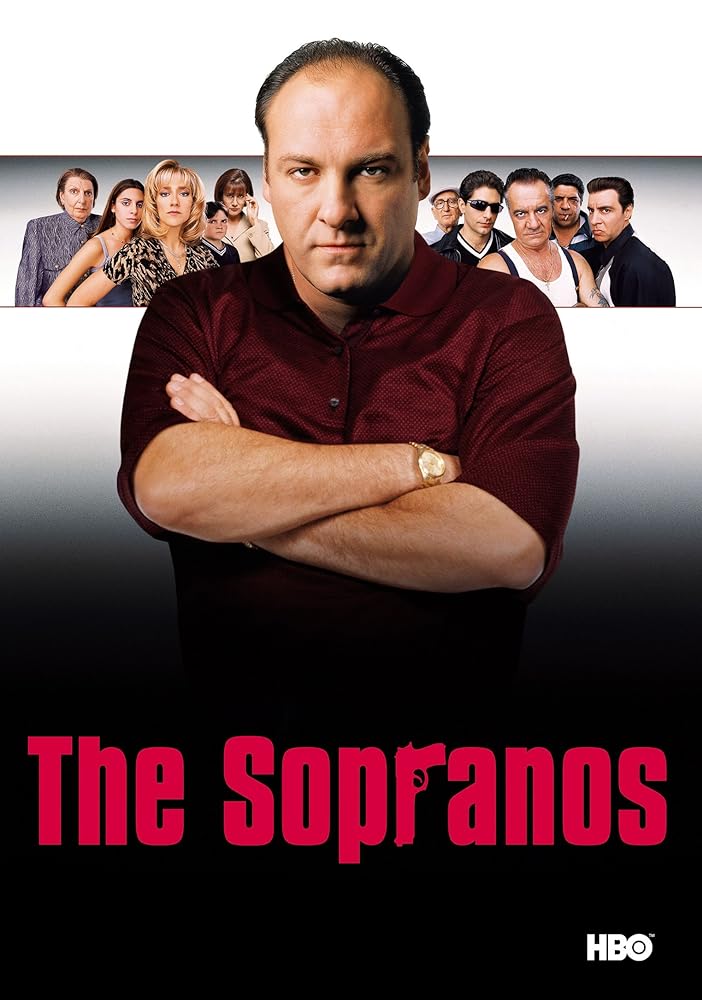
A Look Back at The Sopranos 20 Years Later


As you can imagine, a lot of fuss is being made about this year being the 20th anniversary of the debut of the groundbreaking HBO mob drama The Sopranos. And for once, the fanfare is justified. David Chase’s series broke the mold and totally reshaped what a television series could do. It turned HBO from a modest cable network into the main source for what can only be described as a revolution in what the medium was capable of.
HBO would be at the forefront for much of it: having already set the tone with Sex and the City and Oz, it would continue to shape the game with incredible series such as Six Feet Under, The Wire and Deadwood. And if one wants to look at a series as a genealogy of television, the writers who would work on the series would go on to create some truly remarkable series as well. The most famous of these scribes was Matthew Weiner, who brought forth AMC’s Mad Men, but just as astonishing were some of the series that came forth by regulars or those who just passed through: Todd Kessler would create Damages, Terence Winter would bring forth Boardwalk Empire, and James Manos, who left after the first season would create Showtime’s signature series Dexter.
And I haven’t even mentioned all of the memorable actors who graced the screen. Understandably James Gandolfini and Edie Falco got the lion’s share of the attention as Tony and Carmela Soprano. Falco alone probably has entire shelf in her apartment holding up all of the awards she got in one of the most remarkable female roles in TV history. But the entire cast covered themselves in glory – from Lorraine Bracco in what would we her greatest role as Dr. Melfi, Dominic Chianese as Uncle Junior, Michael Imperioli as Christopher, all the way down to Steven Schirripa as Bobby and Drea De Matteo as Adriana.
It was a superlative series routinely regarded as one of the greatest – if not the greatest ever made. (Only The Wire and Breaking Bad are considered in the same breath) Yet I spent most of my early years as a television critic, railing against how messy and often overblown I thought that the series was, that it was an ugly and disgusting show, that never delivered on its brilliant first season. And that was before the controversial finale. (I’ll get to that in a bit.) Looking at my earlier readings of those reviews, I can’t help but cringe at some of my naïveté.
Among my complaint was the gratuitousness of the violence. Now compared to a lot of the series that have come in The Sopranos aftermath, it seems also mild in comparison. But I had come from being a huge fan of Oz, Tom Fontana’s prison dramas, without which, its pretty safe to say, there would have been no The Sopranos. And while I could understand the endless cycle of prison violence (many of which involved detain ex-wiseguys), for some reason I couldn’t accept it in the ‘normal world’.
I believe my biggest argument against was that it seemed to be to default reaction of every major character. They always seemed to have a choice, and they always took the bloody option. What I think I completely missed was that this was the crux of so much of what Chase had at the center of the series. Given the nature of what man deals with, he will always choose the easy option. In the case of Tony and his clique, that was omerta.
More to the point, Chase was arguing that change with people is difficult, and most people don’t want to do it. How many times did Carmela come face to face with so much Tony’s violence and infidelities? In the most famous climax of the series – that of the fourth season – she actually gathered the nerve to throw him out of the house. Yet at the end of the following season, she let him return, even though he wouldn’t even promise to change. She was trying to find a way to live, and she couldn’t do it without the lifestyle. You don’t have to be a rocket scientist to see the implications in the legitimate world – how many times did the Clintons make their own compromises?
Perhaps the clearest case of this is Christopher. In the early seasons, he was torn between his birthright as a wiseguy, and his desire to go into movies. On more than one occasion, he tried to reach for that. But Tony’s inner ugliness – and charisma – kept pulling in. And it really cost him everything he cared about, including his life in the last episodes.
The Sopranos (1999)
The other thing that probably unsettled me was the way that Chase and his colleagues completely destroying the idea of an arc, delivering anticlimax after anticlimax. Richie Aprile seemed to be about to become a threat to Tony. Then Janice shot him in the penultimate of Season 2. Furio seemed about to become a rival to Tony and a romantic lover of Carmela. He returns to Italy, never to be seen again. And don’t even ask what happened to that Russian who got away in the Pine Barrens. Even the writers don’t know.
Maybe that’s the real reason we shouldn’t have been so shock when the series final episode cut to black just before it seemed anything big was going to happen to Tony. Was he ever prosecuted? Shot by Members Only guy?  Choked to death on an onion ring? We’re never going to know for sure, and I have a feeling Chase likes it that way. It’s possible that Chase will give a deathbed confession as to what really happened to Tony afterward, but I imagine the only reason he will is because by then, it would be an anticlimax after all the speculation before, during, and after. And I kind of think he likes that.
But for all that, perhaps the thing that really is the scariest about The Sopranos is what it says about human nature. As Tony said in the Pilot to Dr. Melfi: “I feel like I came in at the end”. Many took it to say, he meant not just the end of the mob as a power, but that of the American Dream as whole. I think there may actually be something even darker than that at the core. In Oz, one could justify all the bleakness by saying the characters were in prisoner and victims of the system. One could make the same argument for most of the characters in the spider web of The Wire. But in The Sopranos, most of the characters were upper-class or working class white people. Always making what was the easy choice for them, never thinking of other people or how thinks affected them. Never was this more evident in ‘Kennedy and Heidi’, the two teenagers forced Tony and Christopher into a car wreck, then refused to go back because it was dark and she was on her learner’s permit – an accident that led to Christopher’s death. Are we all just variations on The Sopranos? Are we all going to leave problems for other people to deal with? Its unsettling – hell, its terrifying to even think of it. And what does that say about us as viewers?
What we can be sure of is that while Tony thought he came in at the end, it was really the beginning. The New Golden Age of Television could not have happened without The Sopranos. And that really is something to celebrate. We may all be going to hell for it, but at least it’ll be fun getting there.


Monday, February 11, 2019

I Don't Like Monday: Black Monday Review


One of the more unsatisfying works on TV this decade was Showtime’s House of Lies. It had one of the most talented collections of actors at the center – Don Cheadle, Kirsten Bell, Glynn Turman – and a lot of great guest actors. But like so many Showtime series, it drowned in its own muck. A huge part of the reason for this failure has to be laid at the feet of Cheadle. Playing Marty Conn, a management consultation whose sole purpose in life seemed to be created crises in companies that he was fired to fix, there was a self-destructive center in him that the series never explained. Part of was, he could never see beyond the next job even when he was ostensibly planning for his retirement. The statement: “It is not enough for me to win. My enemies must lose” gets at the center of his character. The problem was, everybody – even the people who hired him – were the enemy.
I wish I could say that Cheadle learned his lesion when he returned to Showtime a little more than three years later for their new series Black Monday. But unfortunately, about the only thing that separates Marty from Mo, the head of a hedge fund in the mid 1980s, is thirty years and a shitload of cocaine. And, given what I’ve seen in the last three episodes, Mo is even worse than Marty. Marty, however, disorganized he was, had a plan. Mo literally seems to fly by the seat of his pants, getting into worse and worse situations. And, as the series makes clear in it’s title, there are going to be horrible consequences. The series opens on October 19, 1987, the day of the worst stock market crash in American history, and its very clear that Mo’s going to cause it, and at least somebody we met is going to die as a direct result.
Don Cheadle in Black Monday (2019)
In House of Lies, Cheadle was practically the only strength of the series. Here, he’s the greatest anchor to it.  Marty, at least, was willing to do the work, and had people he cared about in his life. Mo’s closest companion seems to be his robot butler, and doesn’t seem willing to deal with any plan above the first step. He plays video games at morning meetings, and doesn’t seem willing to make any level of connection that isn’t an insult. The only thing you can say in his favor is that this is probably what every trader in Wall Street was at the time and may be now. But considering where we are as a culture, that just make the so-called comedy even more depressing.
It’s rather a shame because there actually are some good things in this series. Andrew Rannels does fine work as Blair, the corn-fed yokel who ends up working in Mo’s hedge fund as a direct pawn in Mo’s schemes. Blair is the only character on the series with any principles at all, which makes it almost certain he will get ground down. And by far the best thing about this show is that it finally gives a great role to Regina Hall, one of the great African-American character actresses of our time. Playing Dawn, Mo’s best trader as well as ex-girlfriend, Hall is exquisite playing a woman who is just as tough as man, and by far the smartest person in the room, she’s the only one who can call Mo on his bullshit and (sometimes) get away with it. What makes it more interesting that she has risen to her level even further than Mo has, considering that her parents were very close to hippies. She sees the world a lot clearer than anyone else, including her family and fiancé, and watching her in any scene, she clearly commands it.
I’m not going to deny it, there also a lot of very good 1980s references that this series that this shows take a lot of joy in bringing up. Mo is glad to have Rae Dawn Chong attend his birthday celebration. Dwight Gooden is invited to a characters bar mitzvah, but spends in 45 minutes in the bathroom. (three guesses why.) There’s a strong insinuation that Wall Street and Working are inspired by Mo’s firm, and it does this old gamers heart proud to see everybody at the firm looking at ‘Duck Hunt’ on a good old Nintendo like it’s the greatest ever thing. But I have to tell you, considering that this show came from the minds of Happy Endings, one of the most beloved series in recent years, and all the talent in front of the screen, Black Monday is a huge disappointment. Showtime may have run a big campaign for it (they even flashed back their logo to what it looked like in the 1980s), but there are better places to go for nostalgia. This is part of the 1980s I could really do without remembering.
My score: 2.25 stars.

Saturday, February 9, 2019

Deadwood Episode Guide: Recointerring The Rim


Written by Jody Worth
Directed by Davis Guggenheim

It’s only three episodes into Deadwood, and it’s already become very clear what a magnificent character Al Swearengen is. We’re already having a hard time imagining anybody other than Ian McShane as the lead, which is why it is remarkable to learn that not only was McShane not Milch’s first choice to play Swearengen, he wasn’t even the second choice.
The first man that Milch saw was Ed O’Neill, best known to the previous generation of viewers as the hapless Al Bundy in the 90s classic Married… With Children and to this generation as the patriarch on the five-time Emmy winner Modern Family.  I have great respect for O’Neill as an actor, but I can understand why HBO executives couldn’t have seen him in this role – there’s something just too relatable about him.
Milch’s second choice was the brilliant character actor Powers Boothe, and he might have been more than up to the task, but he took ill just before filming was to begin. So in order to encourage Boothe to get better, and to assure him he’d always have a role when he did, Milch created the fictional character of Cy Tolliver, who we meet in the early stages of this episode, as Tolliver and his crew open a third saloon, the Bella Union.
At this early stage, Tolliver appears to be a much better dressed version of what Swearengen is providing at the Gem. The games he offers are a different type than the one we see at the Gem (we see craps, which apparently was being introduced as a gambling venture at this time), the people are better dressed, and his prostitutes seem fancier and more ‘refined’. Tolliver seems whiskey-slick, and the people around him seem to be closer to equals than the ones we see at the Gem. Joanie Stubbs, the head girl seems more eloquent, and less abused than Trixie does, and Eddie Sawyer (played superbly by the late Ricky Jay) seems more comfortable as a second in command than any of Al’s seconds at this juncture. And its clear that Tolliver is at least Swearengen’s equal when it comes to scheming – Swearengen tries to recruit Leon, Tolliver’s faro dealer/opium addict, and it’s revealed very quickly that Tolliver knows exactly what is going on. (On a side note, as someone who grew up watching Square One TV, it’s kind of stunning to see Larry Cedar gone so to pot as Leon.) They seem a lot closer to a genuine family then whatever we see at the Gem. But we will soon see that there is a dark underbelly to the better polished level of the Bella Union. Maybe this is the reason that while Swearengen currently sees them as a real threat to an operation, he will never follow up on his early decision to destroy them. The two will uneasily coexist as rivals for the length of the series, but Tolliver never poses a real danger.
It sure as hell doesn’t seem that way at first, though. Swearengen is infuriated when the previous owner of the property Artie Simpson, announces he sold to Tolliver, and then decides to (literally) take the money and run. He is visibly distracted when Sol comes to him, still trying to buy the lot for Seth and his hardware store, and then makes a big production of not them not selling their goods to Bella Union people. (When Seth readily agrees to this, he meekly {for him, at least} relents) He then seized upon the possibility that Farnum clearly has something to do with, and with good reason – Farnum goes to Eddie, clearly terrified, and tells him that his acting as go-between may end up with him dying.  When he reports to Swearengen that he acted as go-between, E.B. clearly thinks that he’s about to die, and considering that we see  scenes of Swearengen circling him intercut with Dan sneaking up on the doomed Brom Garrett (we’ll get to that in a bit) we can hardly blame him. When Swearengen shows mercy him, we’re really stunned, as we see yet another example of Al’s long-term vision.
There are two other major interrelated stories going on. Wild Bill has clearly spent all of last night since killing Tom Mason (which tells us much about Hickok’s past and present right there) playing poker, and Jack McCall doesn’t seem to have learned anything from what happened last night, and is now openly taunting him. Even when Hickok clearly gets angrier at him, McCall doesn’t seem to care. Hickok leaves the table, and runs into Jane and Charlie, who have since brought the child back to camp in order to rest indoors. At that point, Brom Garrett, tries to hire Hickok to get his money back. Hickok and Utter make it very clear how dangerous the people are who swindled him, but Brom just brushes them off, even when they tell him that Tim Driscoll is dead.
Brom has demonstrated all the classic qualities of an Eastern dilettante, and then proceeds to go see Swearengen, determined to get his money back. It is here for the first time, we begin that Alma may be more than his wife and a dope fiend. She urges patience before going into see Swearengen, telling him to take his walk. Brom, who clearly has an overinflated opinion of himself, does but after encountering Hickok passed out outside his room, somehow takes this as a sign of his being right.
He then goes into see Swearengen, and then openly mentions his connections with the Pinkertons, clearly intending to use that as leverage to get Swearengen to give him his money back. Swearengen then goes to Dan, and tells him to ‘recoinnter the rim’ at an effort to find where the gold, which he couldn’t before might actually be there.  After Brom reluctantly departs, Swearengen simply says: “Make it look like an accident.”
When Brom gets ready to leave, Alma now sees the danger that her egotistical husband either can’t see or won’t let himself. When she urges her husband that they should leave the camp, and either go further west or return to New York, letting this stand “as an adventure”, Brom simply says that he’s not leaving without his money. In one of the many great ironies of Deadwood, we see that Brom’s lack of commitment as well as failure to listen, will not open cost him life but prevent him from becoming the millionaire he initially thought. Because after Dan kills Brom, he looks around where his body landed and finds out, as he’ll tell Swearengen, “that he went owning one hell of a fuckin’ gold strike.”
In the meantime, Wild Bill seems momentarily determined to try and revive himself into the land of the living. After lying passed out at the bottom of the stairs for half the episode, he gets up and agrees to help Bullock and Sol put up their hardware store. But while they begin their early work, two men approach, one to lavish a backhanded praise on him for his appearance at a Wild West show he once did. Hickok is able to at least for awhile push that off. But when another man sends that man away, and as if a term flattering to his idol that he send him off “gouging out his fucking eyes”, Hickok gets pissed. And in reaction, this man says: “You son of a bitch! I hope you get what’s coming to you at this fucking camp, and I hope I fucking see it!” The viewer knows that this is prophecy, and it seems very clear that Wild Bill views it the same. He gets up, and we next see him at the Bella Union, about to get drunk and play poker. It is becoming increasingly clear that while Hickok may be a legend, he is a walking dead man; waiting for the right man to kill him, despite everything Jane and Charlie are trying to do for him.
We are also beginning to see Bullock as something of a transitional figure. The episode begins with him helping to bury Mason’s brother, just as he buried Mason in the beginning of the previous episode. He is still trying to put all the specters of his past behind him, even though he doesn’t seem to mind Hickok’s referral to him as ‘Montana’. When he negotiates with Swearengen this time, he manages to hold his temper, but it’s a temporary stop when McCall shows up, trying to brag, and he throws him in the mud saying: “This tent’s shut to you.” He takes a lot more personally than Hickok the taunts that the men send Hickok while they’re trying to set up the store, and clearly understand when Wild Bill leaves.
And it’s becoming gradually clearer that Swearengen, despite his violent tendency, clearly has a level of decorum buried him. This becomes clear in his two scenes with Trixie. At the opening of the episode, he dresses in one of his finer suits with Trixie help, and talks to her in a gentler tone than he has in the two previous episodes. And the episode closes with Trixie shaving his foot, a gesture that reveals a certain level of trust, with him confiding. When Dan comes into to make his report, Trixie holds up a towel to cover what she’s done, then exits to the balcony. When Dan leaves, she calmly asks: “Should I do the other?” And Al says: “Yeah.” And almost as an afterthought: “Please.” We now realize there are levels to this relationship that are deeper than pimp and whore. And in one we almost consider a throwaway shot, when Trixie goes to the balcony, she meets Alma’s gaze for the first time. We don’t know if this means anything now (there’s a similar shot when Alma meets Jane’s gaze), but there are connections here that will soon be revealed.